publications
2026
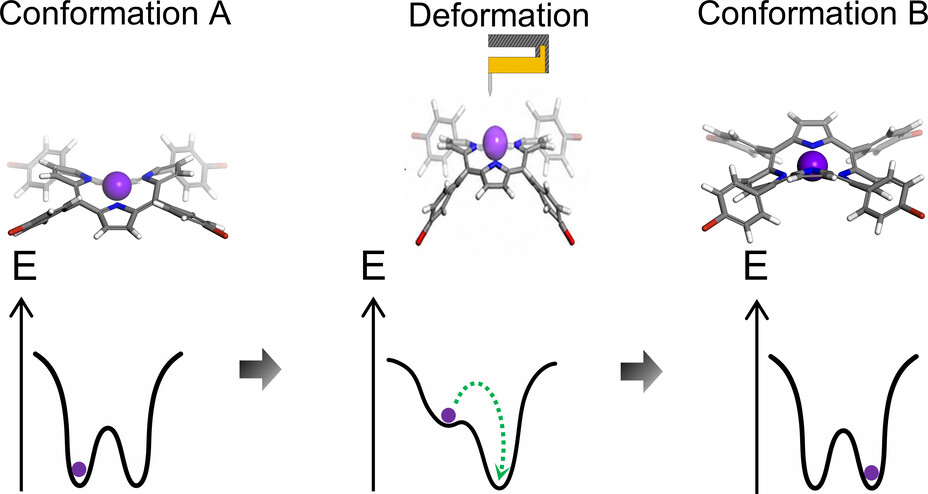
- Forcing a Molecule to Switch: Quantifying Mechanical Control at the Atomic ScaleA.M. Shashika D. Wijerathna, Markus Zirnheld, Michael L. Hildebrand, Myles Perry, Marjorie Cenese, and Yuan ZhangNano Letters (2026)
Mechanically induced conformational switching at the single-molecule level represents a fundamental mechanism for molecular functionality, yet quantitative characterization of the underlying force and energy landscape remains limited. Here, we study individual TBrPP-Co(II) molecules on Au(111) using qPlus atomic force microscopy. By reconstructing interaction potentials from 3D Δf(x,y,z) data, we determine a threshold force of ∼96 ± 8 pN and a tip-induced switching interaction energy of ∼38 ± 4 meV associate with the conformational transition. The isolated tip-molecule force follows a power law (exponent ∼6), indicating dominance of long-range van der Waals interactions. At closer distances, deviations reveal force-induced deformation preceding the transition. Validation via the inflection point test confirms measurement reliability. These findings show that long-range dispersive interactions can mechanically deform a molecule and facilitate conformational switching through a deformation-assisted pathway, providing a quantitative framework for controlling mechanically driven functionality at the single-molecule scale.
- Appl. Mater. Today
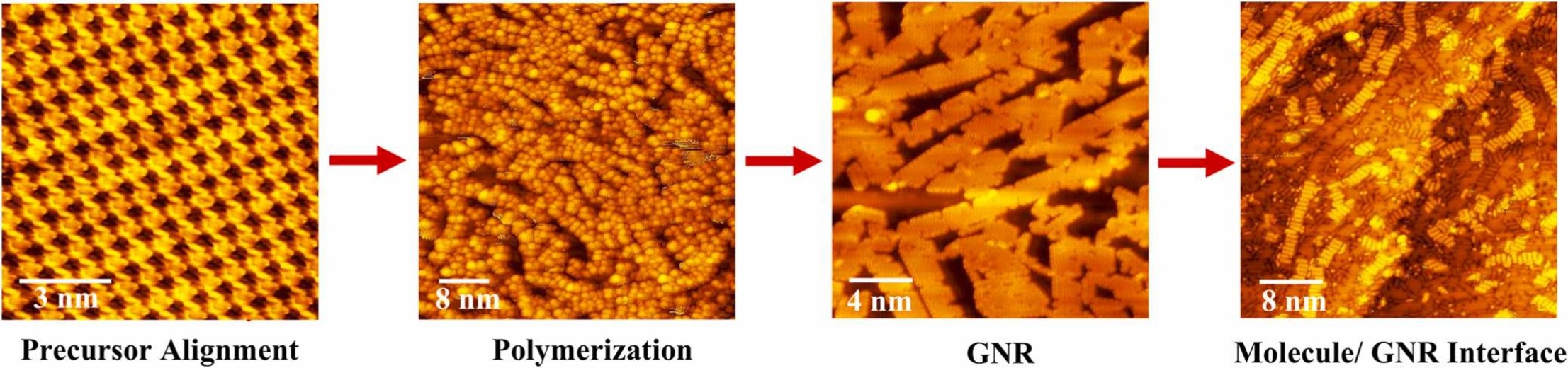 Fabrication of graphene nanoribbons/organic molecules interfaceA.M. Shashika D. Wijerathna, Markus Zirnheld, He Zhao, Michael L. Hildebrand, Daniel J. Antonelli, Rockwell Li, Pingshan Wang, Yiming Li, and Yuan ZhangApplied Materials Today 50, 103249 (2026)
The formation and orientation of graphene nanoribbons (GNRs) during on-surface synthesis, as well as their interaction with organic molecules, remain areas of active investigation. Here, we study the growth of 15-carbon-wide armchair graphene nanoribbons (15-AGNRs) from dibromo-p-pentaphenyl (DBPPP) precursors on Au(111) and the subsequent adsorption of pentacene (5 P) using low-temperature (∼77 K) scanning tunneling microscopy. By systematically tracking the transformation from precursor assemblies to polymer intermediates and final nanoribbons, we show that the herringbone reconstruction of the Au(111) substrate imprints a directional preference at the precursor stage, which is preserved through the polymer phase and ultimately manifested in the final ribbon orientations. We further demonstrate that pentacene adsorption on 15-AGNRs is governed primarily by the anisotropic geometry of the ribbons rather than the metallic substrate. These results provide a unified picture of orientation evolution during GNR growth and highlight the role of nanostructure geometry in directing molecular organization at hybrid organic-carbon interfaces.


2024
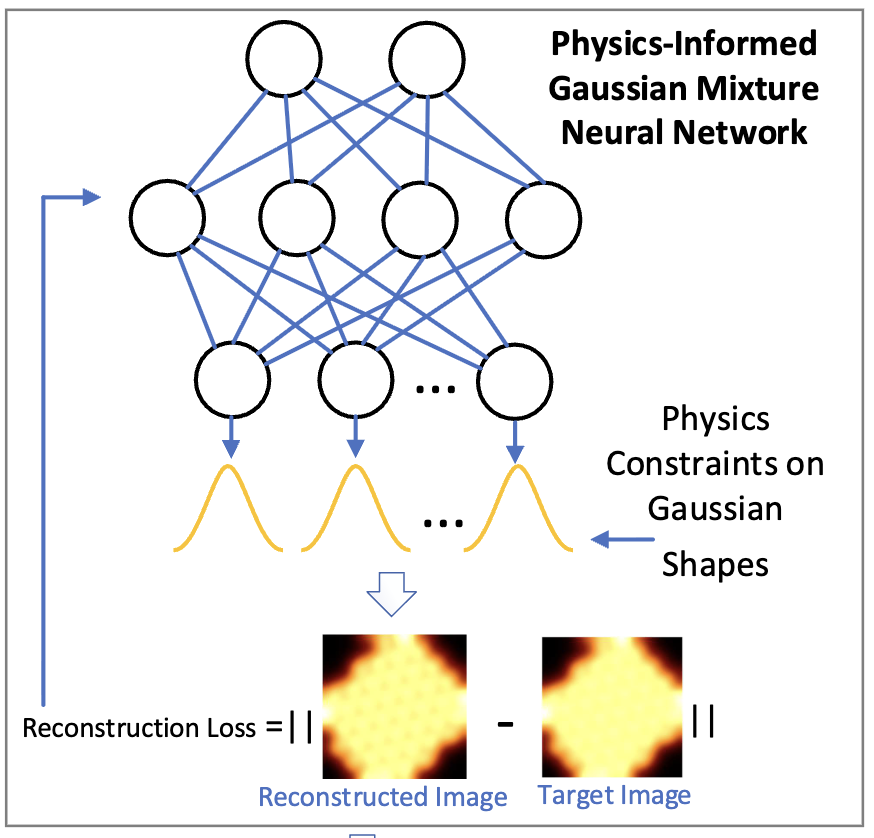
- A Physics-Informed Gaussian Mixture Neural Network to Extract Atomic Signals from Scanning Tunneling Microscope ImagesRockwell Li, Ryan Guenthner, and Yuan ZhangIn 2024 IEEE MIT Undergraduate Research Technology Conference (URTC), 617–621 (2024)
Scanning Tunneling Microscopes (STMs) have led to many scientific breakthroughs in nanoscience. The STMs cannot achieve their full imaging potential due to signal overlaps and interference. This project seeks to treat the signal interference using a Gaussian Mixture Neural Network (GMNN) with physics-based constraints incorporated. This method is able to localize the individual atomic signals within an STM image, providing a quantitative analysis of nano-material properties. The GMNN is applied to a case study of Graphene Nano-Ribbon (GNR). The underlying atomic structures of GNR are successfully extracted from blurry STM images. Additionally, the extracted atomic signals of GNR from STM images provide a unique way to measure the pairwise atom distances, which enables us to gain important insight into the irregularity of experimental GNR structures. This will allow us to study the correlation between GNR structure irregularity and its superconductivity and superfluidity in the future.
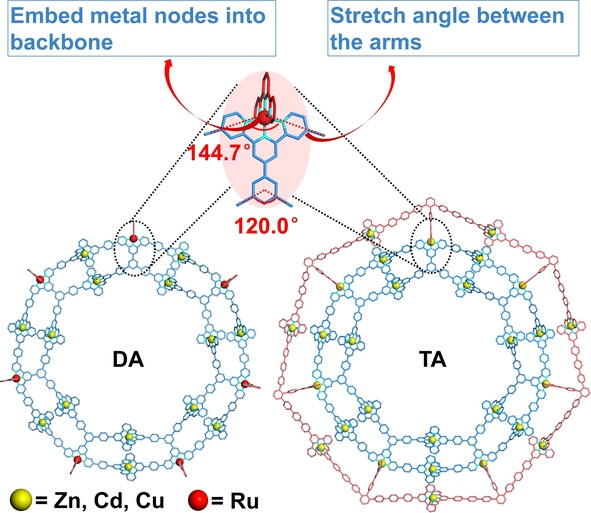
- Adjusting the Architecture of Heptagonal Metallo-Macrocycles by Embedding Metal Nodes into the BackboneHe Zhao, A. M. Shashika D. Wijerathna, Qiangqiang Dong, Qixia Bai, Zhiyuan Jiang, Jie Yuan, Jun Wang, Mingzhao Chen, Markus Zirnheld, Rockwell Li, Die Liu, Pingshan Wang, Yuan Zhang, and Yiming LiAngewandte Chemie International Edition 63(6), e202318029 (2024)
Coordination-driven self-assembly has been extensively employed for the bottom-up construction of discrete metallo-macrocycles. However, the prevalent use of benzene rings as the backbone limits the formation of large metallo-macrocycles with more than six edges. Herein, by embedding metal nodes into the ligand backbone, we successfully regulated the ligand arm angle and assembled two giant heptagonal metallo-macrocycles with precise control. The angle between two arms at position 4 of the central terpyridine (tpy) extended after complexation with metal ions, leading to ring expansion of the metallo-macrocycle. The assembled structures were straightforwardly identified through multi-dimensional NMR spectroscopy (1H, COSY, NOESY), multidimensional mass spectrometry analysis (ESI-MS and TWIM-MS), transmission electron microscopy (TEM), as well as scanning tunneling microscopy (STM). In addition, the catalytic performances of metallo-macrocycles in the oxidation of thioanisole were studied, with both supramolecules exhibiting good conversion rates. Furthermore, fiber-like nanostructures were observed from single-molecule heptagons by hierarchical self-assembly.

2023
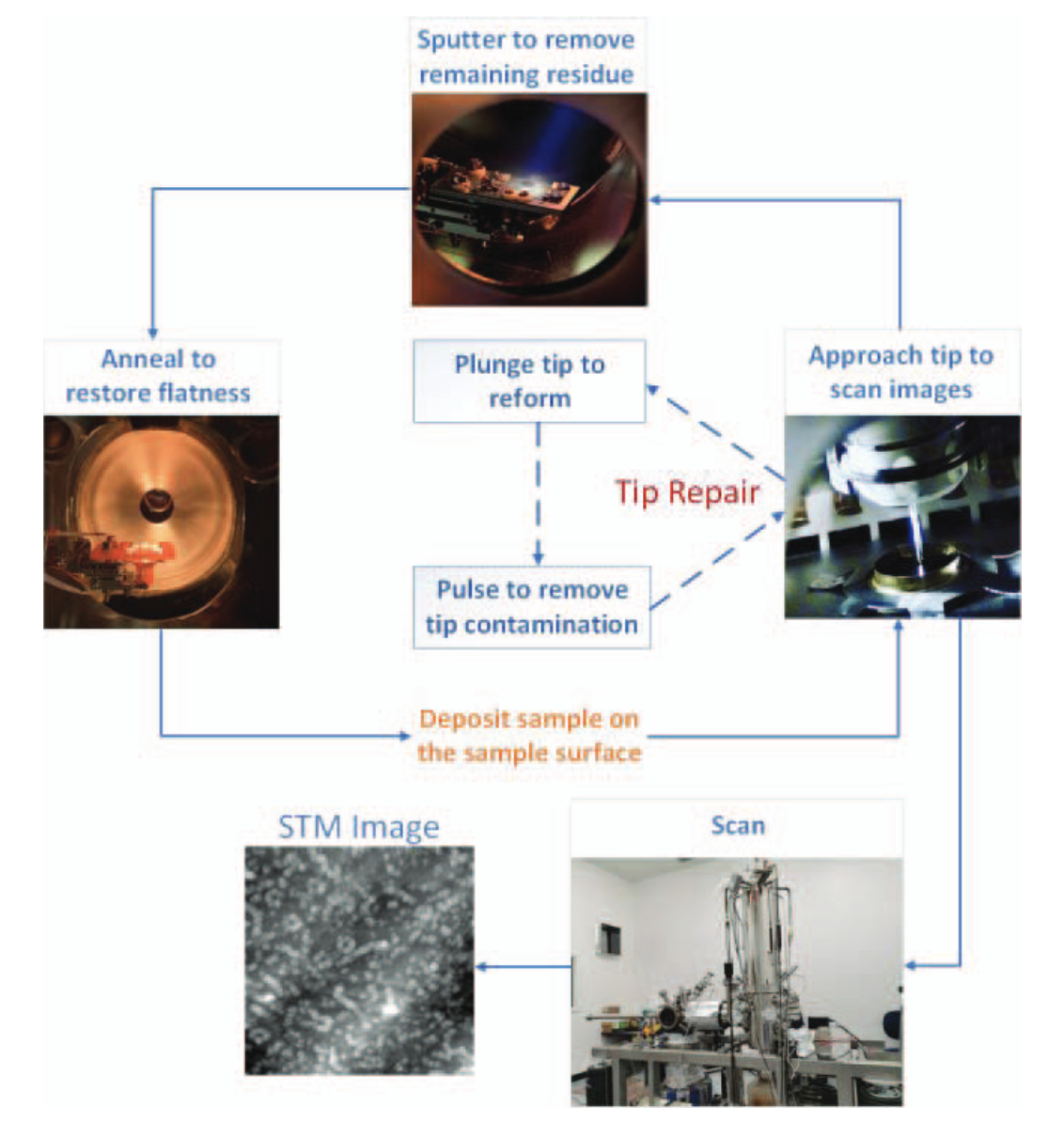
- Breaking the Limits of Scanning Tunneling Microscopy Using Image Super ResolutionRockwell T. Li, Shashika Wijerathna, and Yuan ZhangIn 2023 International Conference on Machine Learning and Applications (ICMLA), 1138–1143 (2023)
A Scanning Tunneling Microscope (STM) is a type of microscope that harnesses quantum tunneling to process images of surfaces at the atomic level. STMs are used to study particles at nanoscale, enabling detailed investigations at the level of individual atoms. However, the resolutions of STM images are often limited by realistic experimental conditions. In this paper, we investigate image super-resolution methods empowered by deep learning to break the experimental limits of STM to obtain high-resolution STM images. We first train an object detection model to detect and segment target molecules from the raw STM images. Then, an STM Super-Resolution (STM-SR) program based on Super-Resolution Generative Adversarial Networks (SRGAN) is developed and trained on a high-resolution STM dataset to learn to convert the low-resolution STM images into high-resolution ones. Our benchmark results on the test STM set show that STM-SR leads to significant resolution improvement measured by Peak Signal to Noise Ratio (PSNR), compared to the bicubic interpolation method. This super-resolution breaks the experimental barrier and reaches a higher resolution level. Finally, a Localization Scanning Tunneling Microscopy (Localization-STM) method is developed to reconstruct and further enhance the resolution of the STM image beyond the STM tip-radius limitation. As a case study, we apply our machine learning approach to generate super-resolution STM images that resemble the supramolecule, which matches its theoretical chemical structure well. The machine learning-based super-resolution approach enables STM images to reach a similar quality under less restrictive conditions and brings new insight into atomic-level physics. In particular, this method can be applied to the STM study of large, complex molecular structures, which requires stringent experimental conditions.
2022
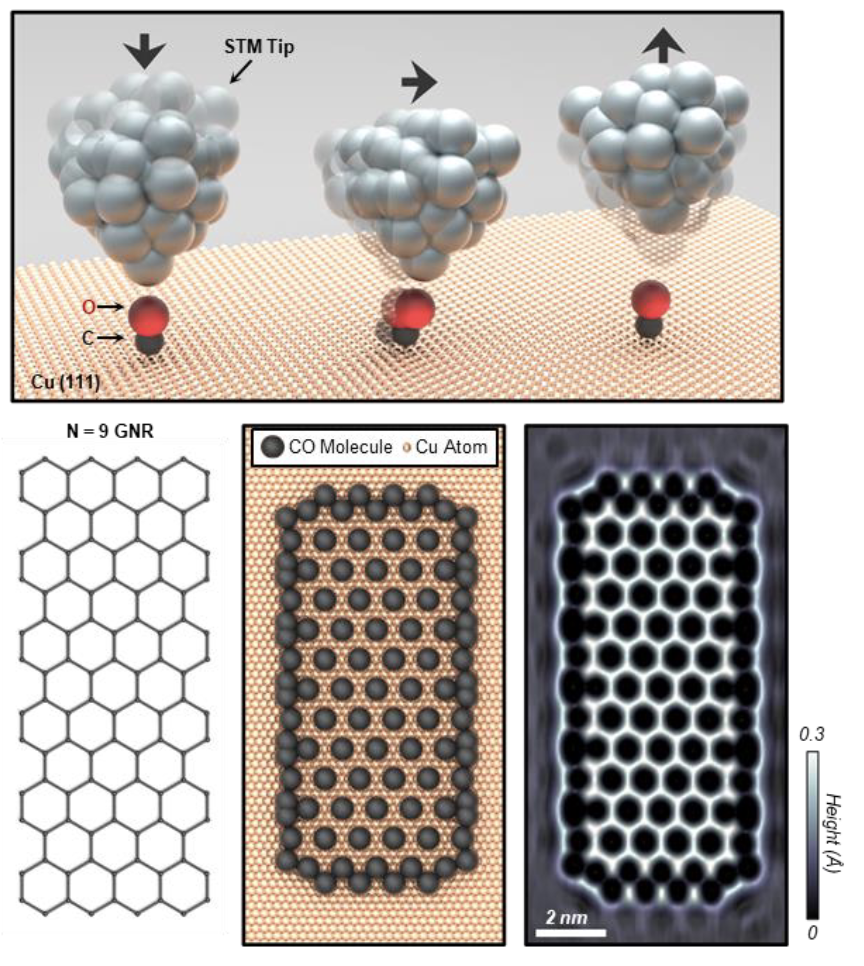
- Artificial Graphene Nanoribbons: A Test Bed for Topology and Low-Dimensional Dirac PhysicsDaniel J. Trainer, Srilok Srinivasan, Brandon L. Fisher, Yuan Zhang, Constance R. Pfeiffer, Saw-Wai Hla, Pierre Darancet, and Nathan P. GuisingerACS Nano 16(10), 16085–16090 (2022)
We synthesize artificial graphene nanoribbons by positioning carbon monoxide molecules on a copper surface to confine its surface state electrons into artificial atoms positioned to emulate the low-energy electronic structure of graphene derivatives. We demonstrate that the dimensionality of artificial graphene can be reduced to one dimension with proper “edge” passivation, with the emergence of an effectively gapped one-dimensional nanoribbon structure. These one-dimensional structures show evidence of topological effects analogous to graphene nanoribbons. Guided by first-principles calculations, we spatially explore robust, zero-dimensional topological states by altering the topological invariants of quasi-one-dimensional artificial graphene nanostructures. The robustness and flexibility of our platform allow us to toggle the topological invariants between trivial and nontrivial on the same nanostructure. Ultimately, we spatially manipulate the states to understand fundamental coupling between adjacent topological states that are finely engineered and simulate complex Hamiltonians.


2021
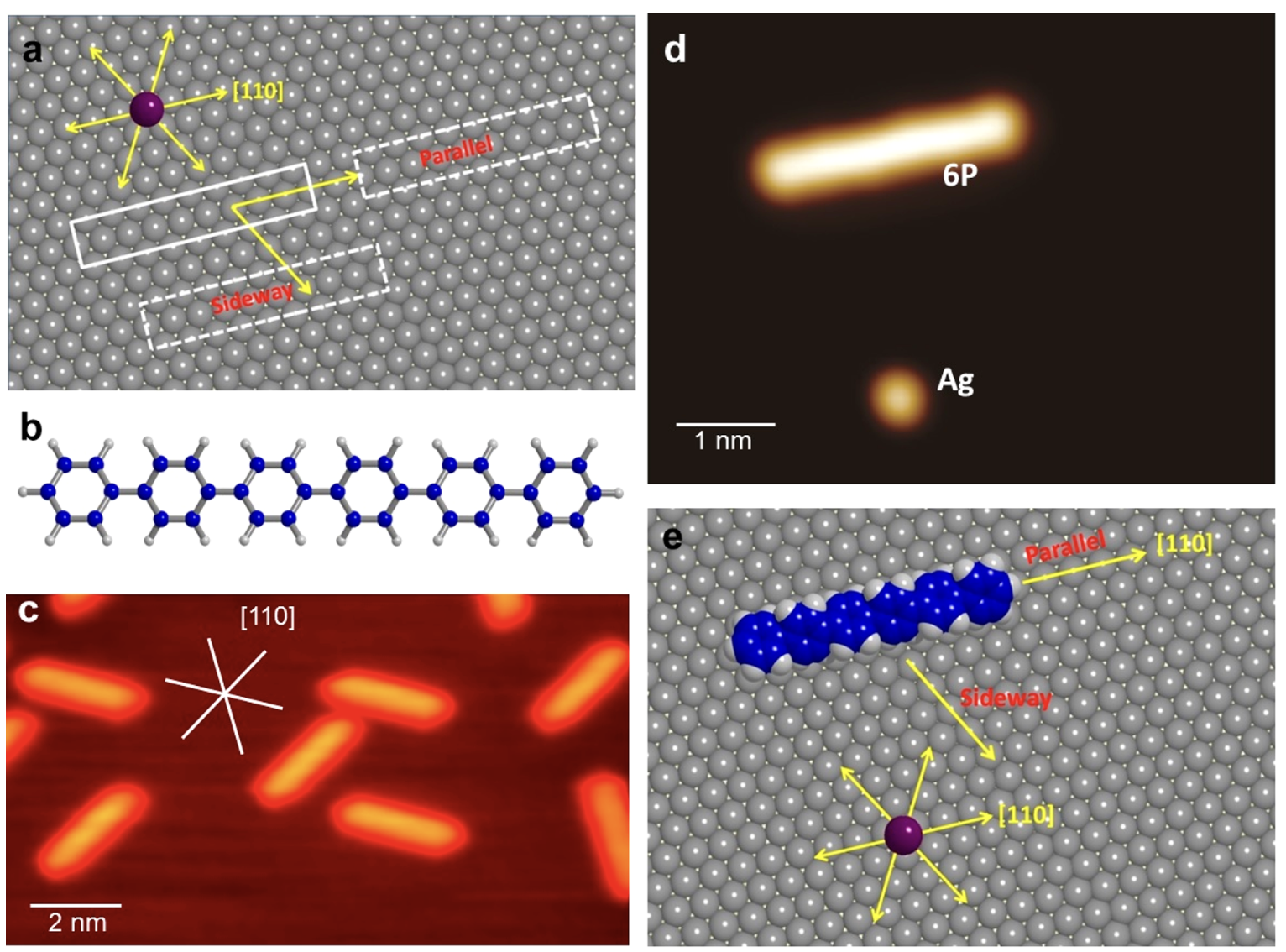
- One-Dimensional Lateral Force Anisotropy at the Atomic Scale in Sliding Single Molecules on a SurfaceYuan Zhang, Daniel J. Trainer, Badri Narayanan, Yang Li, Anh T. Ngo, Sushila Khadka, Arnab Neogi, Brandon Fisher, Larry A. Curtiss, Subramanian K. R. S. Sankaranarayanan, and Saw Wai HlaNano Letters 21(15), 6391–6397 (2021)
Using a q+ atomic force microscopy at low temperature, a sexiphenyl molecule is slid across an atomically flat Ag(111) surface along the direction parallel to its molecular axis and sideways to the axis. Despite identical contact area and underlying surface geometry, the lateral force required to move the molecule in the direction parallel to its molecular axis is found to be about half of that required to move it sideways. The origin of the lateral force anisotropy observed here is traced to the one-dimensional shape of the molecule, which is further confirmed by molecular dynamics simulations. We also demonstrate that scanning tunneling microscopy can be used to determine the comparative lateral force qualitatively. The observed one-dimensional lateral force anisotropy may have important implications in atomic scale frictional phenomena on materials surfaces.
2020
- Giant Concentric Metallosupramolecule with Aggregation-Induced Phosphorescent EmissionYiming Li, Gui-Fei Huo, Bingqing Liu, Bo Song, Yuan Zhang, Xiaomin Qian, Heng Wang, Guang-Qiang Yin, Alexander Filosa, Wenfang Sun, Saw Wai Hla, Hai-Bo Yang, and Xiaopeng LiJournal of the American Chemical Society 142, 14638–14648 (2020)
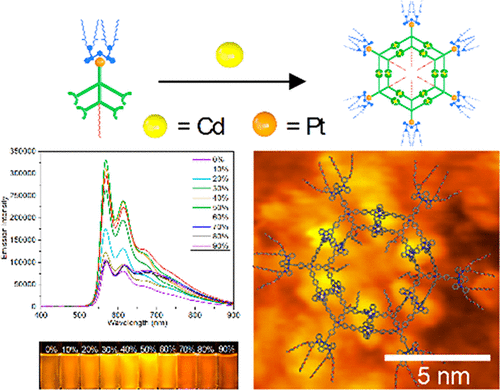
Fluorescent metallosupramolecules have received considerable attention due to their precisely controlled dimensions as well as the tunable photophysical and photochemical properties. However, phosphorescent analogues are still rare and limited to small structures with low-temperature phosphorescence. Herein, we report the self-assembly and photophysical studies of a giant, discrete metallosupramolecular concentric hexagon functionalized with six alkynylplatinum(II) bzimpy moieties. With a size larger than 10 nm and molecular weight higher than 26 000 Da, the assembled terpyridine-based supramolecule displayed phosphorescent emission at room temperature. Moreover, the supramolecule exhibited enhanced aggregation-induced phosphorescent emission compared to the ligand by tuning the aggregation states through intermolecular interactions and significant enhancement of emission to CO2 gas.
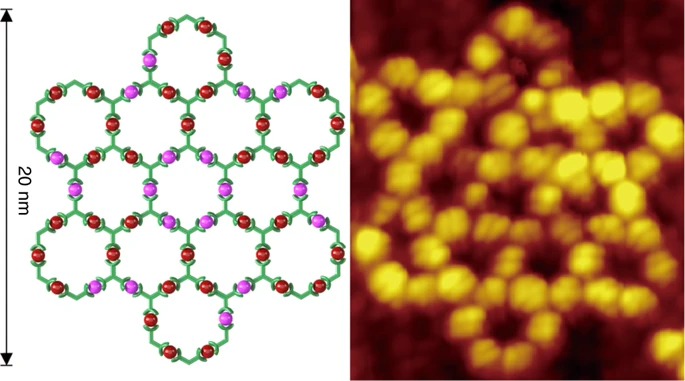
- Intra- and Intermolecular Self-Assembly of a 20-nm-Wide Supramolecular Hexagonal GridZhe Zhang, Yiming Li, Bo Song, Yuan Zhang, Xin Jiang, Ming Wang, Ryan Tumbleson, Changlin Liu, Pingshan Wang, Xin-Qi Hao, Tomas Rojas, Anh T. Ngo, Jonathan L. Sessler, George R. Newkome, Saw Wai Hla, and Xiaopeng LiNature Chemistry 12, 468–474 (2020)
For the past three decades, the coordination-driven self-assembly of three-dimensional structures has undergone rapid progress; however, parallel efforts to create large discrete two-dimensional architectures—as opposed to polymers—have met with limited success. The synthesis of metallo-supramolecular systems with well-defined shapes and sizes in the range of 10–100 nm remains challenging. Here we report the construction of a series of giant supramolecular hexagonal grids, with diameters on the order of 20 nm and molecular weights greater than 65 kDa, through a combination of intra- and intermolecular metal-mediated self-assembly steps. The hexagonal intermediates and the resulting self-assembled grid architectures were imaged at submolecular resolution by scanning tunnelling microscopy. Characterization (including by scanning tunnelling spectroscopy) enabled the unambiguous atomic-scale determination of fourteen hexagonal grid isomers.
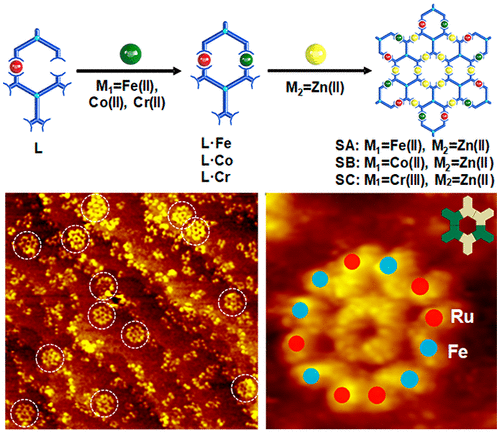
- Self-Assembly of Metallo-Supramolecules under Kinetic or Thermodynamic Control: Characterization of Positional Isomers Using Scanning Tunneling SpectroscopyLei Wang, Bo Song, Yiming Li, Lele Gong, Xin Jiang, Ming Wang, Shuai Lu, Xin-Qi Hao, Zhenhai Xia, Yuan Zhang, Saw Wai Hla, and Xiaopeng LiJournal of the American Chemical Society 142, 9809–9817 (2020)
Coordination-driven self-assembly has been extensively employed to construct a variety of discrete structures as a bottom-up strategy. However, mechanistic understanding regarding whether self-assembly is under kinetic or thermodynamic control is less explored. To date, such mechanistic investigation has been limited to distinct, assembled structures. It still remains a formidable challenge to study the kinetic and thermodynamic behavior of self-assembly systems with multiple assembled isomers due to the lack of characterization methods. Herein, we use a stepwise strategy which combined self-recognition and self-assembly processes to construct giant metallo-supramolecules with 8 positional isomers in solution. With the help of ultrahigh-vacuum, low-temperature scanning tunneling microscopy and scanning tunneling spectroscopy, we were able to unambiguously differentiate 14 isomers on the substrate which correspond to 8 isomers in solution. Through measurement of 162 structures, the experimental probability of each isomer was obtained and compared with the theoretical probability. Such a comparison along with density functional theory (DFT) calculation suggested that although both kinetic and thermodynamic control existed in this self-assembly, the increased experimental probabilities of isomers compared to theoretical probabilities should be attributed to thermodynamic control.
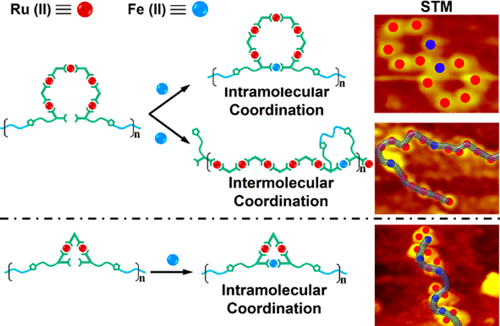
- Synthesis of Metallopolymers and Direct Visualization of the Single Polymer ChainZhikai Li, Yiming Li, Yiming Zhao, Heng Wang, Yuan Zhang, Bo Song, Xiaohong Li, Shuai Lu, Xin-Qi Hao, Saw-Wai Hla, Yingfeng Tu, and Xiaopeng LiJournal of the American Chemical Society 142, 6196–6205 (2020)
During the past few decades, the study of the single polymer chain has attracted considerable attention with the goal of exploring the structure–property relationship of polymers. It still, however, remains challenging due to the variability and low atomic resolution of the amorphous single polymer chain. Here, we demonstrated a new strategy to visualize the single metallopolymer chain with a hexameric or trimeric supramolecule as a repeat unit, in which Ru(II) with strong coordination and Fe(II) with weak coordination were combined together in a stepwise manner. With the help of ultrahigh-vacuum, low-temperature scanning tunneling microscopy (UHV-LT-STM) and scanning tunneling spectroscopy (STS), we were able to directly visualize both Ru(II) and Fe(II), which act as staining reagents on the repeat units, thus providing detailed structural information for the single polymer chain. As such, the direct visualization of the single random polymer chain is realized to enhance the characterization of polymers at the single-molecule level.




2019
- A Chiral Molecular Propeller Designed for Unidirectional Rotations on a SurfaceYuan Zhang, Jan Patrick Calupitan, Tomas Rojas, Ryan Tumbleson, Guillaume Erbland, Claire Kammerer, Tolulope Michael Ajayi, Shaoze Wang, Larry A. Curtiss, Anh T. Ngo, Sergio E. Ulloa, Gwenael Rapenne, and Saw Wai HlaNature Communications 10, 3742 (2019)
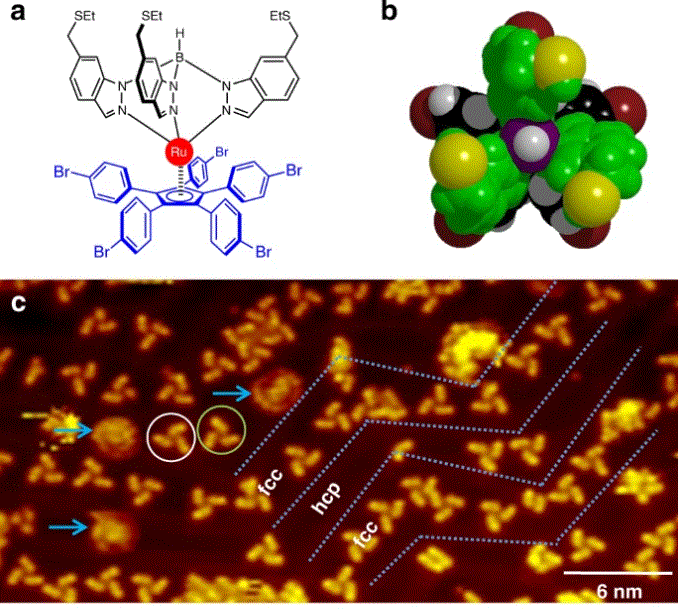
Synthetic molecular machines designed to operate on materials surfaces can convert energy into motion and they may be useful to incorporate into solid state devices. Here, we develop and characterize a multi-component molecular propeller that enables unidirectional rotations on a material surface when energized. Our propeller is composed of a rotator with three molecular blades linked via a ruthenium atom to a ratchet-shaped molecular gear. Upon adsorption on a gold crystal surface, the two dimensional nature of the surface breaks the symmetry and left or right tilting of the molecular gear-teeth induces chirality. The molecular gear dictates the rotational direction of the propellers and step-wise rotations can be induced by applying an electric field or using inelastic tunneling electrons from a scanning tunneling microscope tip. By means of scanning tunneling microscope manipulation and imaging, the rotation steps of individual molecular propellers are directly visualized, which confirms the unidirectional rotations of both left and right handed molecular propellers into clockwise and anticlockwise directions respectively.
- Combining Synthesis and Self-Assembly in One Pot to Construct Complex 2D Metallo-Supramolecules Using Terpyridine and Pyrylium SaltsHeng Wang, Yiming Li, Hao Yu, Bo Song, Shuai Lu, Xin-Qi Hao, Yuan Zhang, Ming Wang, Saw-Wai Hla, and Xiaopeng LiJournal of the American Chemical Society 141, 13187–13195 (2019)
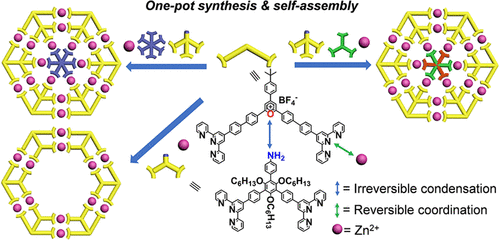
Multicomponent self-assembly in one pot provides an efficient way for constructing complex architectures using multiple types of building blocks with different levels of interactions orthogonally. The preparation of multiple types of building blocks typically includes tedious synthesis. Here, we developed a multicomponent synthesis/self-assembly strategy, which combined covalent interaction (C–N bond, formed through condensation of pyrylium salt with primary amine) and metal–ligand interaction (N → Zn bond, formed through 2,2′:6′,2″-terpyridine-Zn coordination) in one pot. The high compatibility of this pair of interactions smoothly and efficiently converted three and four types of components into the desired complex structures, which are supramolecular Kandinsky Circles and spiderwebs, respectively.
- Negative Differential Resistance Observed on the Charge Density Wave of a Transition Metal DichalcogenideAdina Luican-Mayer, Yuan Zhang, Andrew DiLullo, Yang Li, Brandon Fisher, Sergio E. Ulloa, and Saw-Wai HlaNanoscale 11, 22351–22358 (2019)
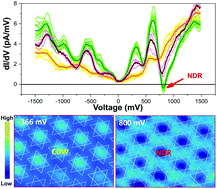
Charge density waves and negative differential resistance are seemingly unconnected physical phenomena. The former is an ordered quantum fluid of electrons, intensely investigated for its relation with superconductivity, while the latter receives much attention for its potential applications in electronics. Here we show that these two phenomena can not only coexist but also that the localized electronic states of the charge density wave are essential to induce negative differential resistance in a transition metal dichalcogenide, 1T-TaS2. Using scanning tunneling microscopy and spectroscopy, we report the observation of negative differential resistance in the commensurate charge density wave state of 1T-TaS2. The observed phenomenon is explained by the interplay of interlayer and intra-layer tunneling with the participation of the atomically localized states of the charge density wave maxima and minima. We demonstrate that lattice defects can locally affect the coupling between the layers and are therefore a mechanism to realize NDR in these materials.
- Stabilization of a Monolayer Tellurene Phase at CdTe InterfacesTadas Paulauskas, Fatih G. Sen, Ce Sun, Paolo Longo, Yuan Zhang, Saw Wai Hla, Maria K. Y. Chan, Moon J. Kim, and Robert F. KlieNanoscale 11, 14698–14706 (2019)
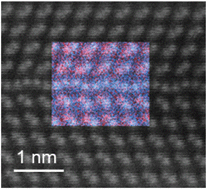
Two-dimensional (2D) materials provide a plethora of novel condensed matter physics and are the new playground in materials science, offering potentially vast applications. One of the critical hurdles for many 2D systems is the synthesis of these low-dimensional systems as well as the prediction and identification of new candidates. Herein, a self-assembly of a monolayer tellurene by bonding CdTe wafers is demonstrated for the first time. The conventional applications of wafer-bonding range from the production of microelectromechanical systems to the synthesis of lattice-mismatched multi-junction photovoltaics. Due to the heterogeneous materials that are typically employed, the bond-interface usually contains a thin amorphous layer or arrays of dislocations. Such an interface is thus itself inactive and in many cases has detrimental effects on the device. The new material phase stabilized in this work consists of an undulating monolayer of tellurium atoms covalently bonded to 111 Cd-terminated CdTe wafer surfaces. First-principles calculations and experimentally observed changes in the localized plasmon excitation energy indicate the clear rearrangement of the underlying band-structure suggesting a metallic character, bands showing linear dispersion, and a significant asymmetric spin-band splitting. The I–V characteristics show the presence of a highly conductive pathway that lowers the resistivity by three orders of magnitude, as compared to bulk CdTe, which can be attributed to the tellurium monolayer. The findings indicate that suitably chosen crystallographic wafer surfaces can act as structural templates allowing the production of exotic phases. The presently stabilized monolayer is an addition to the family of tellurene variants, providing new insights into the fundamental properties of this and other emerging 2D materials, while attracting attention to the unusual side of the wafer-bonding technology exemplified in this study.
- The Effects of Atomic-Scale Strain Relaxation on the Electronic Properties of Monolayer MoS2Daniel J. Trainer, Yuan Zhang, Fabrizio Bobba, Xiaoxing Xi, Saw-Wai Hla, and Maria IavaroneACS Nano 13, 8284–8291 (2019)
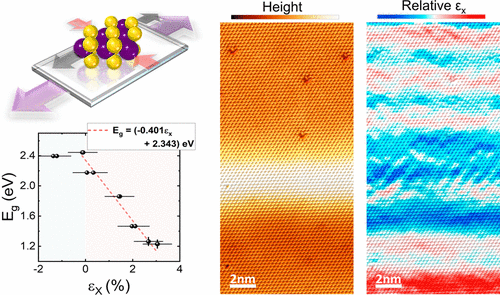
The ability to control nanoscale electronic properties by introducing macroscopic strain is of critical importance for the implementation of 2D materials into flexible electronics and next generation strain engineering devices. In this work we correlate the atomic-scale lattice deformation with a systematic macroscopic bending of monolayer molybdenum disulfide films by using scanning tunneling microscopy and spectroscopy implemented with a custom-built sample holder to control the strain. Using this technique, we are able to induce strains of up to 3% before slipping effects take place and relaxation mechanisms prevail. We find a reduction of the quasiparticle bandgap of about 400 meV per percent local strain measured with a minimum gap of 1.2 eV. Furthermore, unintentional nanoscale strain relaxation of van der Waals monolayer sheets can negatively impact strain engineered device performance. In this paper, we investigate such strain relaxation mechanisms that include 1D ripples and 2D wrinkles which alter the spatial electronic density of states and strain distribution on the atomic-scale.
- Alkali-Metal-Intercalated Percolation Network Regulates Self-Assembled Electronic Aromatic MoleculesYong Hu, Guohua Zhong, Ying-Shi Gua, Nam Hoon Lee, Yuan Zhang, Yang Li, Travis Mitchell, Jason N. Armstrong, Jason Benedict, Saw-Wai Hla, and Shenqiang RenAdvanced Materials 31, 1807178 (2019)
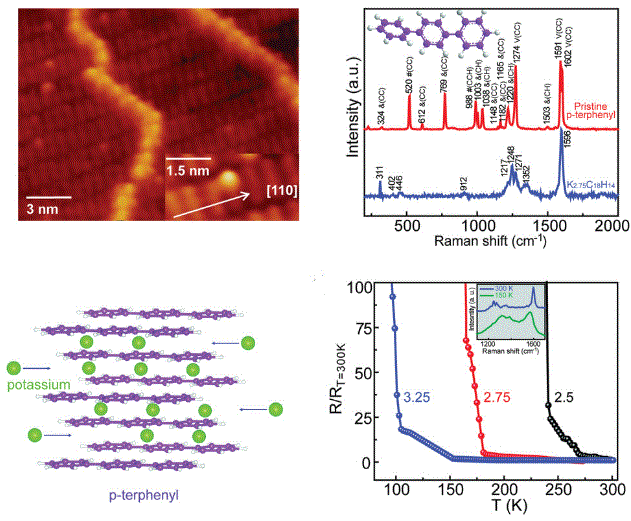
In the continuously growing field of correlated electronic molecular crystals, there is significant interest in addressing alkali-metal-intercalated aromatic hydrocarbons, in which the possibility of high-temperature superconductivity emerges. However, searching for superconducting aromatic molecular crystals remains elusive due to their small shielding fraction volume. To exploit this potential, a design principle for percolation networks of technologically important film geometry is indispensable. Here the effect of potassium-intercalation is shown on the percolation network in self-assembled aromatic molecular crystals. It is demonstrated that one-dimensional (1D) dipole pairs, induced by dipole interaction, regulate the conductivity, as well as the electronic and optical transitions, in alkalimetal-intercalated molecular electronic crystals. A solid-solution growth methodology of aromatic molecular films with a broad range of stability is developed to uncover electronic and optical transitions of technological importance. The light-induced electron interactions enhance the charge-carrier itinerancy, leading to a switchable metal-to-insulator transition. This discovery opens a route for the development of aromatic molecular electronic solids and long-term modulation of electronic efficacy in nano-technologically important thin films.






2018
- Molecular Flexure and Atom Trapping with Sexiphenyl Molecules by Scanning Tunneling Microscope ManipulationYuan Zhang, Shaoze Wang, Kai-Felix Braun, and Saw-Wai HlaSurface Science 678, 215–221 (2018)
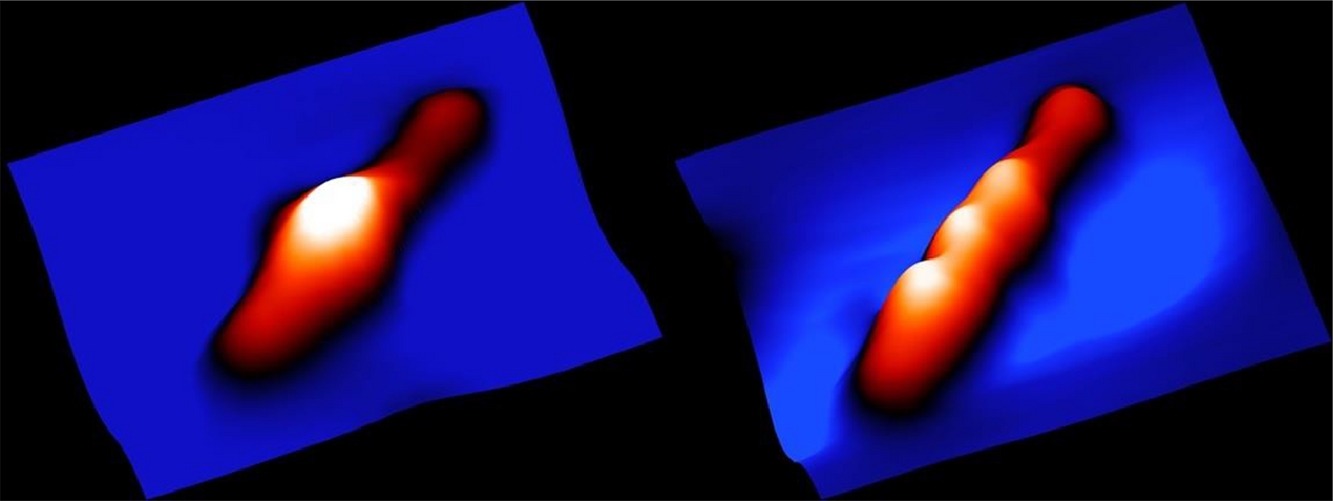
Molecular flexure, and molecule-metal contact of para-sexiphenyl molecules on a Ag(111) surface are investigated by using low temperature scanning tunneling microscopy, and molecular manipulations. Atom trapping with sexiphenyl molecules is realized by laterally manipulating the molecules onto individual silver atoms and up to three silver atoms have been trapped. We also demonstrate breaking of a silver dimer into individual silver atoms by atom trapping. STM manipulation experiments show that the molecule-metal complexes formed by the atom trapping are mechanically stable. Moreover, Lateral manipulation of a single sexiphenyl across a Ag(111) atomic step highlights how the molecule moves across step-edges; the molecule can easily conform across the step and it recovers original configuration after the manipulation.
- Subtle Fluorination of Conjugated Molecules Enables Stable Nanoscale Assemblies on Metal SurfacesJens Niederhausen, Yuan Zhang, Fairoja Cheenicode Kabeer, Yves Garmshausen, Bernd M. Schmidt, Yang Li, Kai-Felix Braun, Stefan Hecht, Alexandre Tkatchenko, Norbert Koch, and Saw-Wai HlaJournal of Physical Chemistry C 122, 18902–18911 (2018)
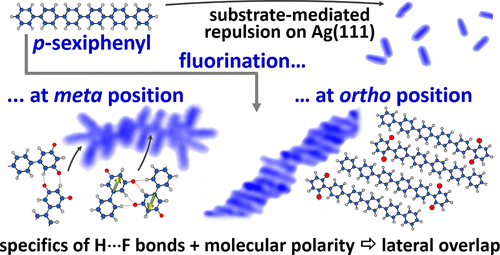
In molecular self-assembly on surfaces, the structure is governed by the intricate balance of attractive and repulsive forces between molecules as well as between molecules and the substrate. Frequently, repulsive interactions between molecules adsorbed on a metal surface dominate in the low-coverage regime, and dense self-assembled structures can only be observed close to full monolayer coverage. Here, we demonstrate that fluorination at selected positions of conjugated molecules provides for sufficiently strong, yet nonrigid, H···F bonding capability that (i) enables the formation of stable nanoscale molecular assemblies on a metal surface and (ii) steers the assemblies’ structure. This approach should be generally applicable and will facilitate the construction and study of individual nanoscale molecular assemblies with structures that are not attainable in the high-coverage regime.
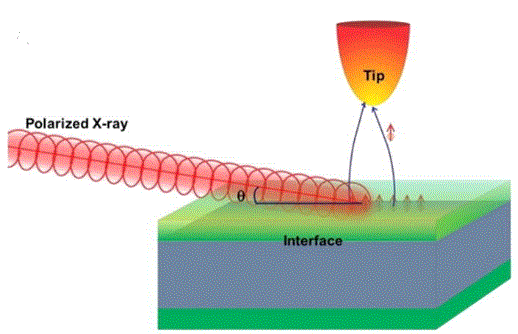
- X-ray Magnetic Circular Dichroism and Near-Edge X-ray Absorption Fine Structure of Buried Interfacial Magnetism Measured by Using a Scanning Tunneling Microscope TipH. Chang, N. Shirato, Y. Zhang, J. Hoffman, D. Rosenmann, J. W. Freeland, A. Bhattacharya, V. Rose, and S.-W. HlaApplied Physics Letters 113, 061602 (2018)
Magnetism at buried interfaces plays a crucial role in many emerging phenomena, but detection of interfacial magnetism in close proximity to a surface with elemental and chemical sensitivity is a challenging task. Here, we use low temperature synchrotron x-ray scanning tunneling microscopy to investigate x-ray magnetic circular dichroism and the near edge x-ray absorption fine structure of La0.67Sr0.33MnO3-LaNiO3 superlattices. In stark contrast to the weak magnetic signal of Mn when the La0.67Sr0.33MnO3 layers are located on top, a robust x-ray magnetic circular dichroism signal is detected when they are buried underneath the LaNiO3 layers. The near edge x-ray absorption fine structure reveals the valence states of manganese, while the oxygen K-edge x-ray absorption spectra show an increase in hole formation, indicating a cogent charge transfer at the LaNiO3/La0.67Sr0.33MnO3 interface. This work demonstrates that scanning tunneling microscopy can be extended to the synchrotron X-ray study of buried interfaces by controlling the tip-sample separation in the nanometer regime.



2016
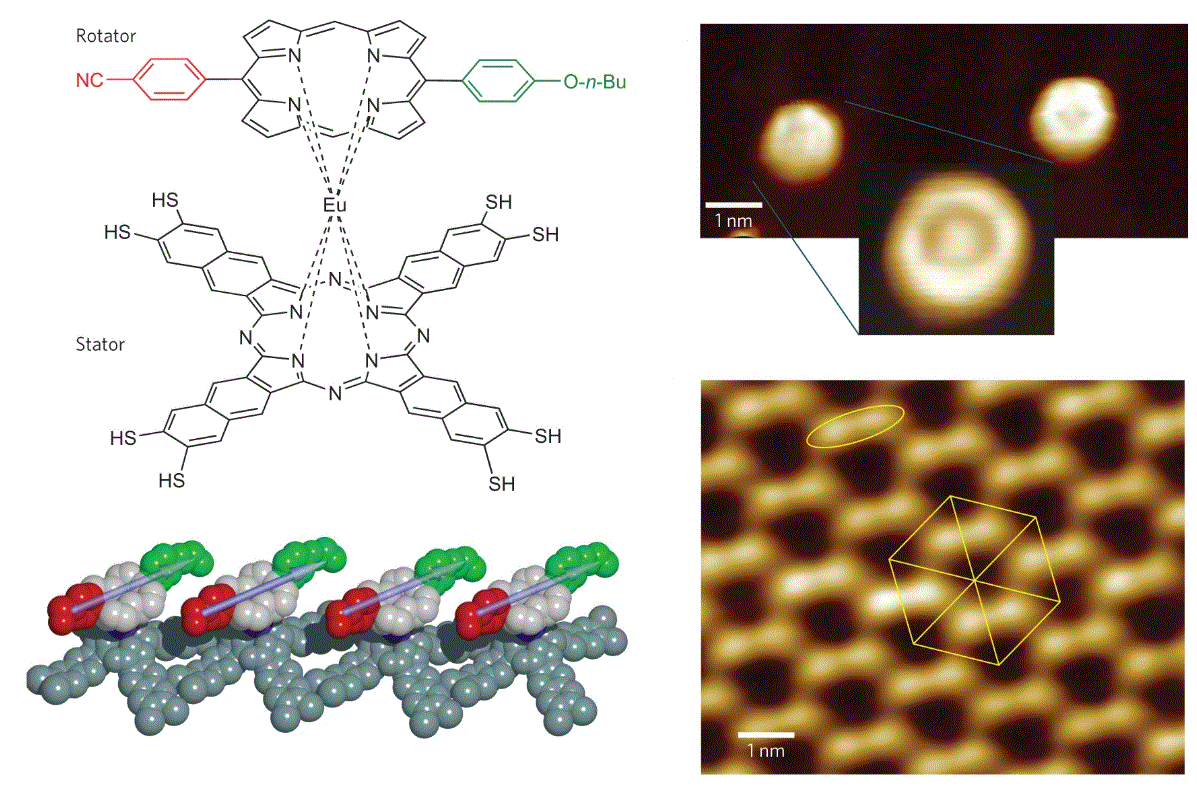
- Simultaneous and Coordinated Rotational Switching of All Molecular Rotors in a NetworkY. Zhang, H. Kersell, R. Stefak, J. Echeverria, V. Iancu, U. G. E. Perera, Y. Li, A. Deshpande, K.-F. Braun, C. Joachim, G. Rapenne, and S.-W. HlaNature Nanotechnology 11, 706–712 (2016)
A range of artificial molecular systems has been created that can exhibit controlled linear and rotational motion. In the further development of such systems, a key step is the addition of communication between molecules in a network. Here, we show that a two-dimensional array of dipolar molecular rotors can undergo simultaneous rotational switching when applying an electric field from the tip of a scanning tunnelling microscope. Several hundred rotors made from porphyrin-based double-decker complexes can be simultaneously rotated when in a hexagonal rotor network on a Cu(111) surface by applying biases above 1 V at 80 K. The phenomenon is observed only in a hexagonal rotor network due to the degeneracy of the ground-state dipole rotational energy barrier of the system. Defects are essential to increase electric torque on the rotor network and to stabilize the switched rotor domains. At low biases and low initial rotator angles, slight reorientations of individual rotors can occur, resulting in the rotator arms pointing in different directions. Analysis reveals that the rotator arm directions are not random, but are coordinated to minimize energy via crosstalk among the rotors through dipolar interactions.

2013
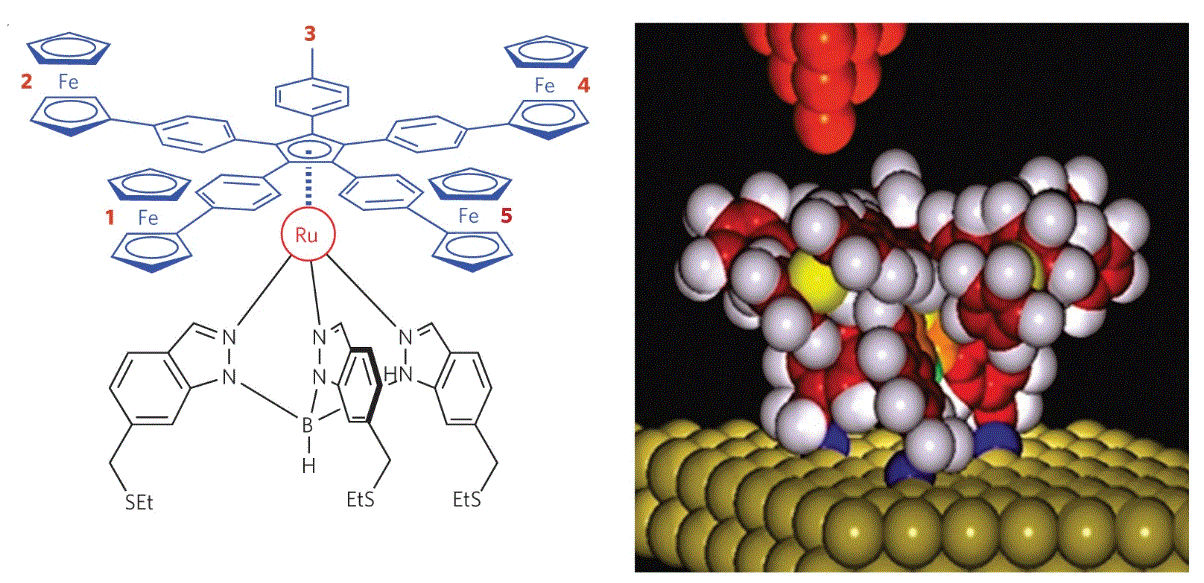
- Controlled Clockwise and Anticlockwise Rotational Switching of a Molecular MotorU. G. E. Perera, F. Ample, H. Kersell, Y. Zhang, G. Vives, J. Echeverria, M. Grisolia, G. Rapenne, C. Joachim, and S.-W. HlaNature Nanotechnology 8, 46–51 (2013)
The design of artificial molecular machines often takes inspiration from macroscopic machines. However, the parallels between the two systems are often only superficial, because most molecular machines are governed by quantum processes. Previously, rotary molecular motors3 powered by light and chemical energy have been developed. In electrically driven motors, tunnelling electrons from the tip of a scanning tunnelling microscope have been used to drive the rotation of a simple rotor in a single direction and to move a four-wheeled molecule across a surface. Here, we show that a stand-alone molecular motor adsorbed on a gold surface can be made to rotate in a clockwise or anticlockwise direction by selective inelastic electron tunnelling through different subunits of the motor. Our motor is composed of a tripodal stator for vertical positioning, a five-arm rotor for controlled rotations, and a ruthenium atomic ball bearing connecting the static and rotational parts. The directional rotation arises from sawtooth-like rotational potentials, which are solely determined by the internal molecular structure and are independent of the surface adsorption site.